A Guide to Building a Construction Audit Trail You Can Actually Trust
Audit trails are still too often assembled retrospectively – pulled together long after materials were delivered or waste left the site. By that point, data is missing, inconsistent, or impossible to verify – resulting in uncertainty, failed audits, disputes, and costly mistakes.
If audit trails are meant to provide confidence, they need to be built while work is happening – not reconstructed afterwards.
Why retrospective compliance doesn’t work
Retrospective compliance assumes that accurate records can be recreated later. In reality, construction sites are too complex and fast-moving for that to hold true.
In a 2025 report, Qflow analysed more than one million data points from materials delivery and waste documentation. The findings were stark: 91% of records required enrichment to be usable, and only 34% of materials data were suitable for calculating A1–A3 carbon emissions.
Around 80% of contractors lack a structured approach to tracking delivery data. Instead, information is fragmented across supplier paperwork, spreadsheets, emails, and photos – often created off-site or submitted late. When audits arrive, teams are left chasing documents, reconciling conflicting records, and filling gaps with estimates.
That creates real exposure:
- Incorrect or non-compliant materials going unnoticed.
- Incomplete or unverifiable waste records.
- Carbon data that can’t be defended.
- Delays, penalties, or reputational damage.
Evidence reconstructed after the work is done will always be less reliable than evidence captured in real time.
What “captured at source” actually means
‘Captured at source’ means that data is recorded on site, as work happens, by the people closest to it – before information is lost, altered, or reinterpreted.
When quality issues are discovered late:
- Non-compliant or substituted materials may already be installed
- Incorrect installation becomes hidden behind finishes
- Missing or inconsistent documentation turns into an admin burden
- Teams are forced into reactive rework and defensive reporting
Preventing this requires a mindset shift – away from end-stage quality control, and toward assurance built into everyday site activity.
Your quality checklist
Checklists are one of the most effective tools for quality assurance on construction sites. Embedded properly, they create consistency across teams and projects and generate an audit trail as a by-product, without adding unnecessary admin.
In most projects, a well-designed checklist should cover three areas:
- Materials and substitutions
Are the delivered materials what was specified? Are substitutions approved and traceable? Are quantities, certifications, and environmental attributes correct?
- Workmanship and tolerances
Is work being carried out to the required standard? Are tolerances, finishes, and interfaces verified while they’re still visible?
- Documentation and evidence
Is proof being captured as work happens – photos, records, confirmations – rather than chased retrospectively for audits or handover?
When and how to verify quality
The most effective quality checks happen at predictable points in the workflow:
Pre-start readiness
Before work begins, confirm that specifications, approved materials, responsibilities, and checklists are in place. Many quality issues originate before site activity even starts.
Materials on arrival
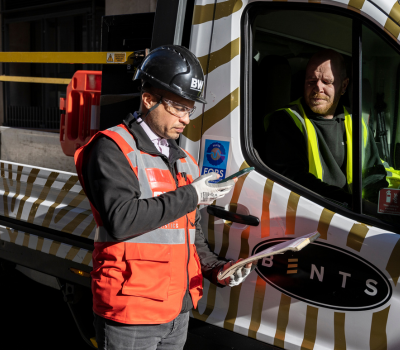
The gate is one of the most important quality control points on site. Verifying deliveries as they arrive prevents non-compliant, damaged, or incorrect materials from ever being installed.
Before handover or sign-off
Final checks should confirm that required evidence already exists – not trigger a scramble to recreate it. When quality has been assured throughout delivery, handover becomes a confirmation step.
This approach relies on clear, stage-based checklists and defined ownership, so it’s always clear who checks what, and when. Photo evidence and digital tools like Qflow can help capture information on site, creating a single, traceable record of quality as work happens.
Quality, compliance, and audit trails are the same problem
A trustworthy audit trail is consistent, traceable, and timely – built on evidence, not memory or manual reconciliation.
When data and evidence are captured at source, teams see fewer repeat defects, less rework, reduced administrative burden, and a clean audit trail. Real-time data shifts the focus from discovery to prevention.
On site, that means confirming materials against specification before installation, flagging damaged or incomplete deliveries immediately, holding suppliers to account with objective evidence, and preventing rework before it starts.
In an environment of increasing regulation and scrutiny, this confidence becomes a commercial advantage. The Get It Right Initiative estimates that removing avoidable error could save the industry £10–25 billion annually, much of it driven by better information and earlier intervention.
This is where quality, compliance, and sustainability come together. When the right materials arrive on site first time, better environmental outcomes follow.
Where Qflow fits
We capture real-time data on materials, waste, and carbon directly from the site, at the moment it happens. By connecting what was designed with what is delivered, used, and removed, Qflow gives teams a clear, verifiable record of what actually occurred.
In practice, that means:
- Verified material deliveries and specifications.
- Credible carbon data built from real site activity.
- A digital audit trail that stands up to scrutiny.
To date, Qflow has captured more than 75,000 material and waste movements at source, helping projects avoid 9,690 tCO₂e and deliver average cost savings of over £221,000 per project per year.
The outcome is better control, lower risk, higher quality, and fewer costly surprises along the way.
The Audit Trail Checklist
If you want to reduce repeat defects, cut rework, and make quality part of day-to-day delivery – not an end-of-project headache – we can help.
Download the Construction Audit Trail Checklist to assess where control is holding and where risk is creeping in across your projects.
It’s designed to help teams:
- Spot gaps early, before they turn into rework or delays
- Bring consistency to quality checks across site stages
- Build a reliable audit trail as work happens, not after the fact


Ready to see Qflow in action?
A 20-minute call to walk through the product on the parts that matter to your team.
News & Insights
Resources to build site better data.
Read insights, reports and practical guides on construction waste, carbon, materials, compliance and the changing role of data in the built environment.